The Problem with Today's Agent Ecosystem
Why current AI agent frameworks cannot meet the demands of regulated environments
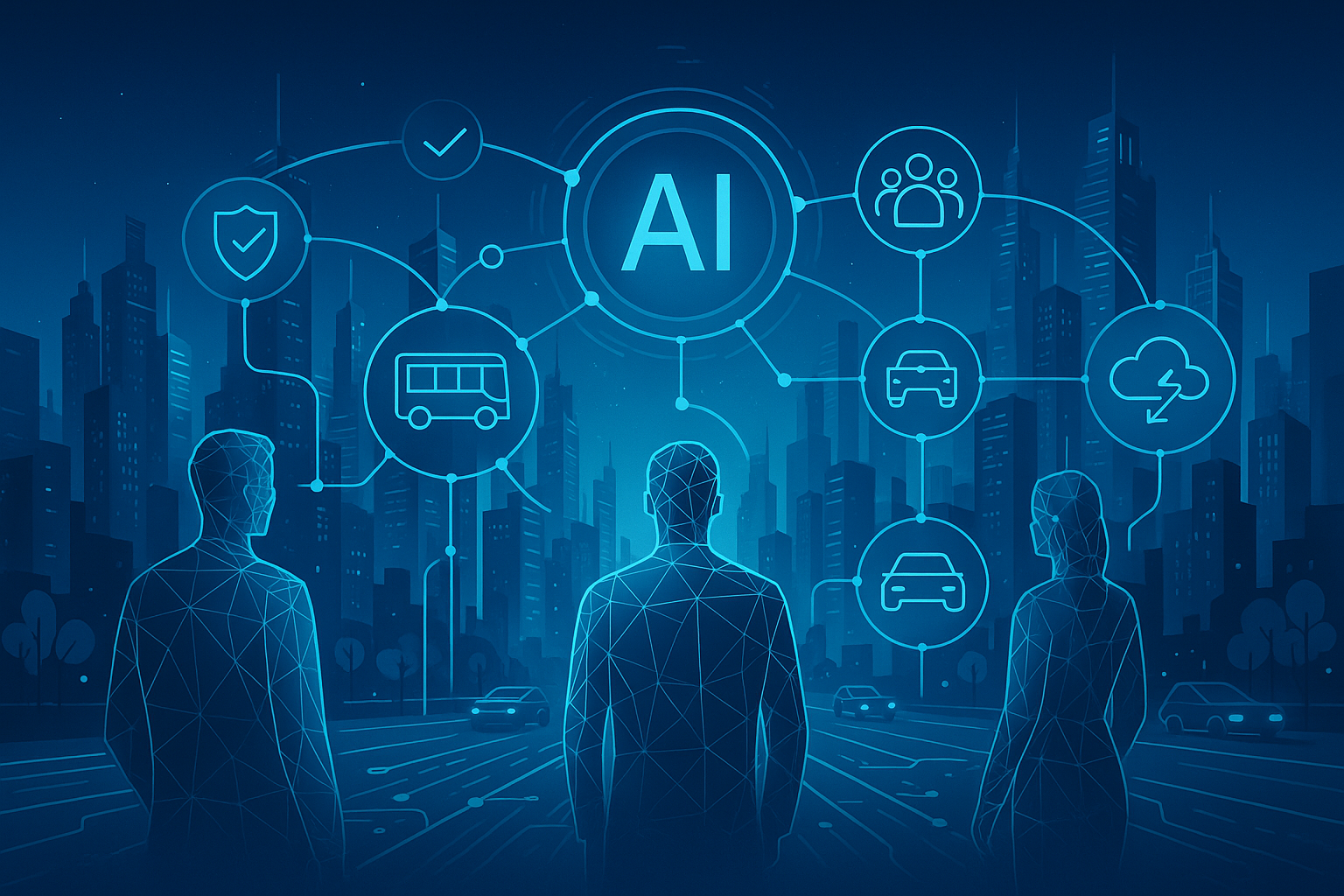
The Current Reality
The current generation of AI agents was not built for the real world — at least not the regulated one. Most frameworks focus on local reasoning and conversation, not on how agents coordinate, prove compliance, or operate safely across organizational boundaries.
The result is an ecosystem of isolated intelligence silos that cannot securely discover, negotiate, or exchange context in a verifiable way.
Fundamental Problems
Lack of Determinism and Auditability
Modern agent systems are fundamentally non-deterministic. Given the same input twice, they often produce different results — an acceptable flaw for creative generation, but fatal in domains like finance, healthcare, or public infrastructure.
Without deterministic orchestration and evidence-based validation, their actions cannot be audited, replayed, or trusted by regulators or enterprises.
Fragmented Identity and Governance
Agents today lack a shared trust and identity layer. Each vendor defines its own authentication model, policy system, and data handling rules. There is no standardized mechanism for mutual verification, consent enforcement, or policy propagation across domains.
This makes it impossible to satisfy compliance regimes such as GDPR, HIPAA, or the EU AI Act in multi-agent or cross-enterprise scenarios.
No Safe Context Transfer
Data sharing between agents remains primitive and insecure. Context is either embedded in prompts — exposing sensitive information — or passed through ad-hoc APIs with no assurance of provenance, integrity, or authorized reuse.
In critical workflows, this means one compromised agent can propagate unverified data through the entire network with no cryptographic chain of custody.
Static Discovery, Dynamic Chaos
Despite the name, "autonomous agents" still depend on manual configuration and static API endpoints. There is no universal discovery or routing protocol that allows agents to find, trust, and federate with others under consistent policy control.
This locks innovation inside proprietary ecosystems and blocks interoperability between industries, regulators, and nations.
The Vision: From Chaos to Coherence
AI needs infrastructure, not improvisation. The next era of intelligent systems will be defined by networks of agents that cooperate under verifiable rules — not by isolated chatbots improvising behind opaque APIs.
The goal is a world where digital agents can coordinate as safely, predictably, and accountably as financial transactions or air traffic control.
Our Architectural Vision
A New Architectural Layer for Trust
Our work focuses on creating the missing trust fabric for intelligent systems — the layer that allows agents to act, communicate, and share context with deterministic precision.
Every action is accountable, every interaction is governed, and every data exchange can be proven authentic and policy-compliant. This ensures that AI systems remain explainable to regulators and trustworthy to the humans who depend on them.
Seamless Federation, Secure Boundaries
In this new model, each domain — a hospital, a bank, a port, or a public authority — operates its own intelligent ecosystem. These ecosystems can collaborate across jurisdictions, but only under cryptographic assurance and explicit consent.
The result is global interoperability without sacrificing local control or privacy.
Context as the Foundation of Intelligence
Intelligence is meaningless without context. By combining network-level awareness, environmental sensing, and domain-specific understanding, we create systems that act not only intelligently but appropriately.
Every decision is grounded in verified context, ensuring that automation enhances human judgment rather than replacing it.
The Deterministic AI Future
This is not the "wild west" of unregulated AI; it is the foundation of a governed digital civilization. A world where smart cities, enterprises, and individuals can trust the machines acting on their behalf — because those machines can explain, verify, and prove every action they take.
Shaping the Standards of Trusted AI
Lane2 is not only building technology — it is helping define the global standards for how intelligent systems communicate, cooperate, and comply.
Our architectures — DOP (Deterministic Orchestration Pipeline), aARP (Autonomous Agent Routing Protocol), and CaaS (Context-as-a-Service) — are designed to become part of the next layer of Internet infrastructure: a secure, auditable foundation for AI collaboration across organizations and nations.
Open Protocols, Fair Access
All core protocols are being prepared for submission to international standards bodies under open, fair, and non-discriminatory licensing principles (FRAND).
This ensures that governments, enterprises, and developers worldwide can implement interoperable systems while maintaining confidence in governance, identity, and evidence integrity.
Protected Core, Shared Innovation
While the open protocols will accelerate adoption, the core deterministic orchestration engine remains protected intellectual property — the reference implementation that guarantees compliance, reproducibility, and verifiable execution.
Through planned strategic licensing, partners will gain access to certified SDKs, verification modules, and integration toolkits that will bring regulatory assurance to their AI infrastructure.
Building the Foundation for Internet 3.0
By combining open standards with protected execution technology, Lane2 is creating a sustainable ecosystem — one where transparency and trust become the currency of intelligent systems.
This approach allows global interoperability without sacrificing accountability, ensuring that the next generation of AI infrastructure is as reliable as the networks that once defined the Internet itself.